
Classic Software Crystal Reports Available in Fleet360
Legacy Crystal Reports (Fleet360)
⚠️ Important: This feature is not enabled by default and must be activated by the RTA Technical Support team. It is intended primarily for customers transitioning from Classic RTA to Fleet360.
These reports can be run on demand as needed. Legacy reports cannot be edited, scheduled for delivery, or configured for automated runtimes. To modify a report or use scheduling features, the report must be recreated within Fleet360’s reporting tool, Exago.
Refer to the Reports Table of Contents (TOC) for more information about using the Fleet360 reporting tool.
The Legacy Reports section in Fleet360 allows customers to run Custom Crystal Reports originally created for the RTA Classic system. This feature provides a way to continue using existing Crystal Reports while transitioning to Fleet360.
Enabling Legacy Reports
To use Legacy Crystal Reports:
Contact RTA Technical Support to enable the Legacy Reports enhancement.
Once enabled, the Legacy Reports section will appear in Fleet360.
Locating Crystal Report Files from Classic
Legacy reports must first be retrieved from the RTA Classic system.
Crystal Reports use the file extension:
*.rpt
Typical locations in Classic:
Custom Crystal Reports
Custom reports were typically stored in:
..\Reports\Custom Crystal Reports\
User-Specific Reports
Within the Custom Crystal Reports folder, there may be sub-folders matching Classic user login IDs.
Example:
..\Reports\Custom Crystal Reports\JSMITH
..\Reports\Custom Crystal Reports\ADMIN
Reports located in these folders were user-specific reports only accessible by that user in Classic.
Once identified, copy the .rpt files to a local computer.
If assistance is needed locating these files, RTA Technical Support can help retrieve them.
Adding Crystal Reports into Fleet360
Once the Legacy feature is enabled and the .rpt files are available, they can be added in Fleet360.
Navigate to:
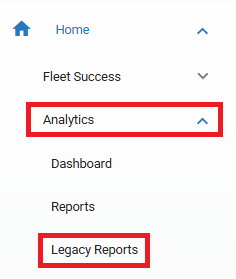
Home → Analytics → Legacy Reports
⚠️ Note:
Crystal Reports cannot be imported in bulk.
Each report must be added individually.
Steps to Add a Custom Crystal Report
Navigate to Home → Analytics → Legacy Reports
Click the + Custom Report button in the upper right corner.

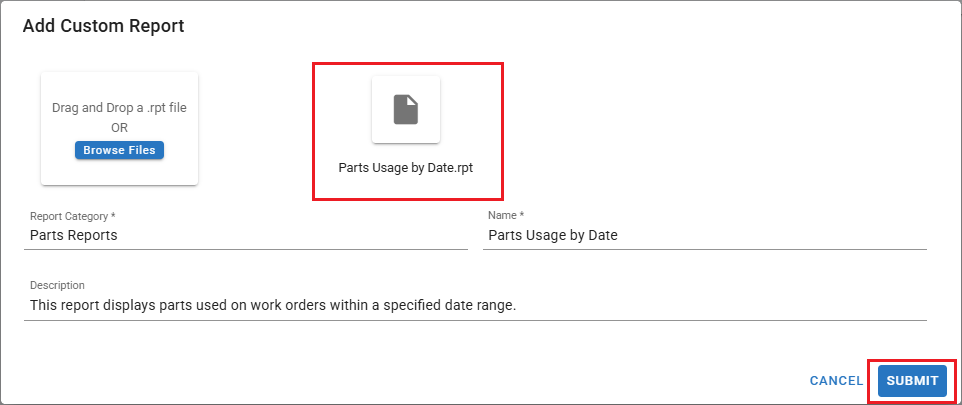
Complete the Add Custom Report form.
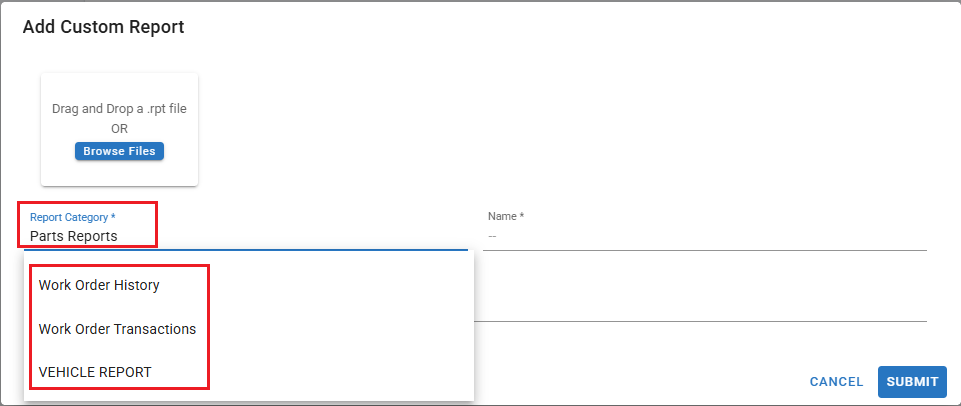
Report Category (Required)
- Select an existing category or create a new one.
Examples:
Work Order Reports
Parts Reports
Purchase Order Reports
Asset Reports
If a new category is entered, Fleet360 will automatically create it and make it available for future reports.
Select the Crystal Report File (Required)
- Upload the Crystal Reports file (*.rpt) by dragging it into the upload area or browsing to its location.
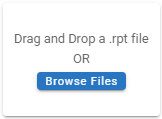
Example: Parts Usage by Date Crystal Report
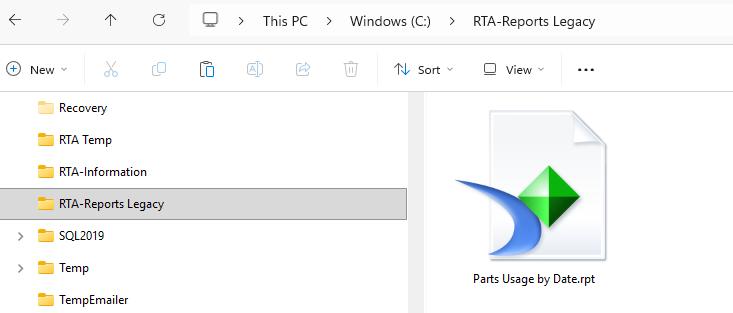
The selected Crystal Report file will appear at the top center of the Add Custom Report section (see below).
Name (Required)
- Enter the name of the report as it will appear in Fleet360.
Examples:
Open Work Orders by Create Date
PO Receipts by Date Range
Parts Usage by Month
Description (Optional but Recommended)
- Provide a short explanation of what the report does.
Example:
This report provides Purchase Order receipt information for a selected date range.
Descriptions help users understand the purpose of the report when browsing available reports.
- Click Submit
✔ After saving the setup, the report will be available in the Legacy Reports section.
Running a Legacy Crystal Report
To run one of your configured reports:
Navigate to Home → Analytics → Legacy Reports
Open the category containing the report.

Click on the report name you want to run.
If the report contains prompts, you will be asked to enter the required information, such as:
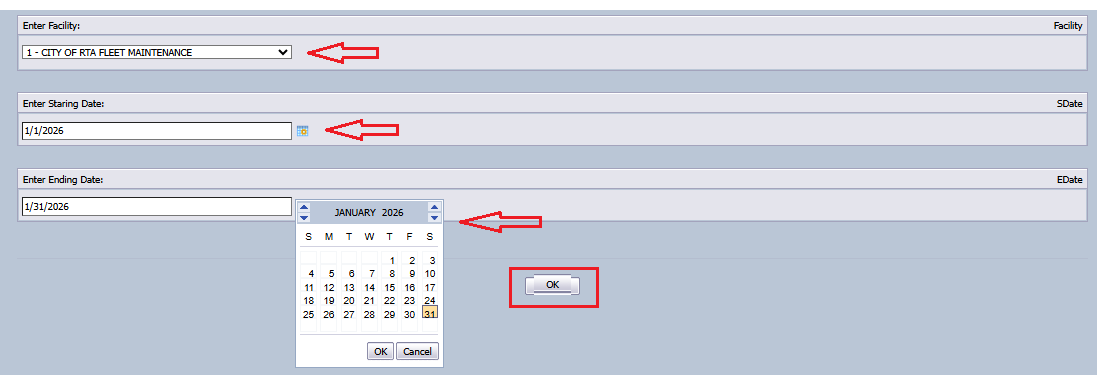
Facility Number
Vehicle Range
Date Range
Other report-specific filters
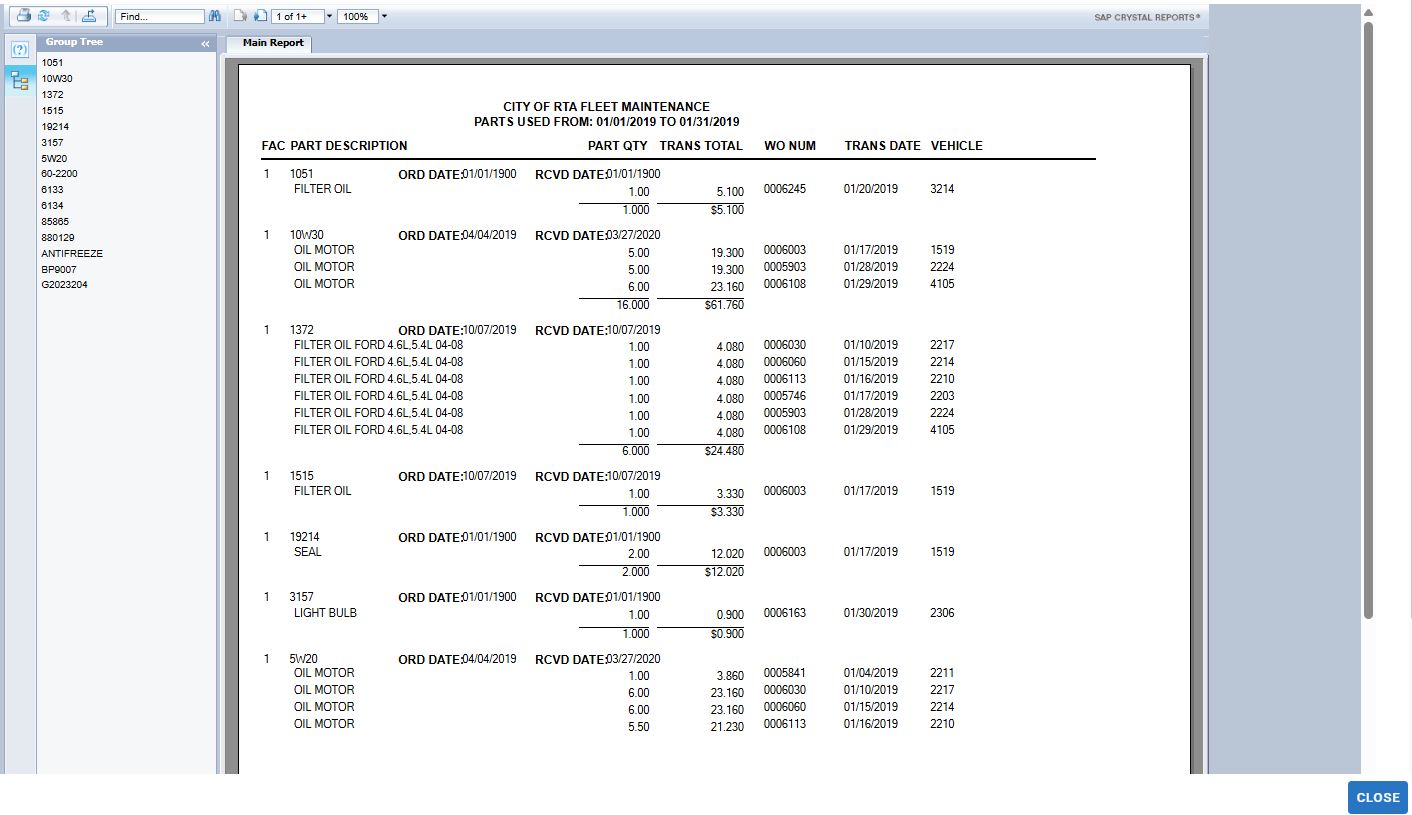
Once the required prompts are entered, hit OK and the Crystal Reports engine will compile the report.
The report will open in the Crystal Viewer, where you can:
View the report results
Print the report
Export the report data to other formats
Removing a Legacy Crystal Report
If you no longer need a report, it can be permanently removed.
Navigate to Home → Analytics → Legacy Reports
Locate the report in its category.
Click the Trash Can icon next to the report.
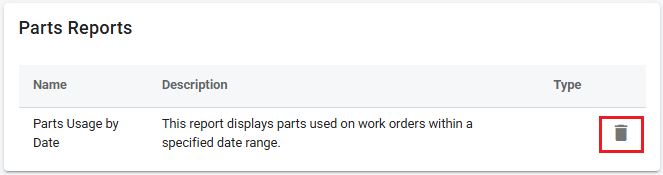
⚠️ This action permanently deletes the report from the Legacy Reports list.
Once a report has been added to a category, that category cannot be changed. The report would need to be removed from Fleet360 using the trash can icon and then re-uploading and added to a different category.
Reports can exist in multiple categories by uploading them into multiple categories.