
Fuel - EFI Review Exceptions
After loading fuel transactions, the next step is to review the transactions and make changes as needed. It is important to not skip this step because the load process does not validate incoming data such as vehicle numbers, pump numbers, meter readings, product codes, fuel quantities, or fuel prices.
Reviewing Exceptions
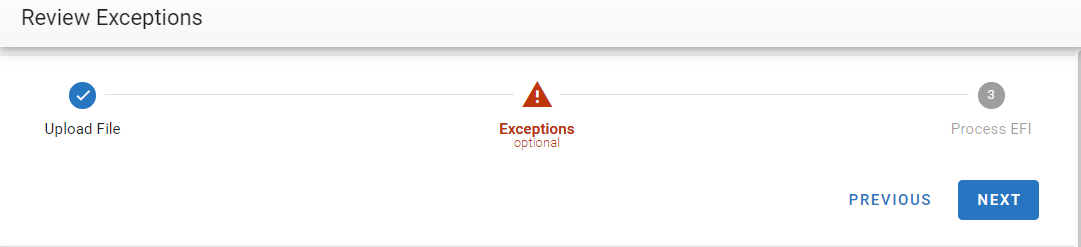
After uploading your fuel file successfully select Next or Fuel > Review Exceptions.
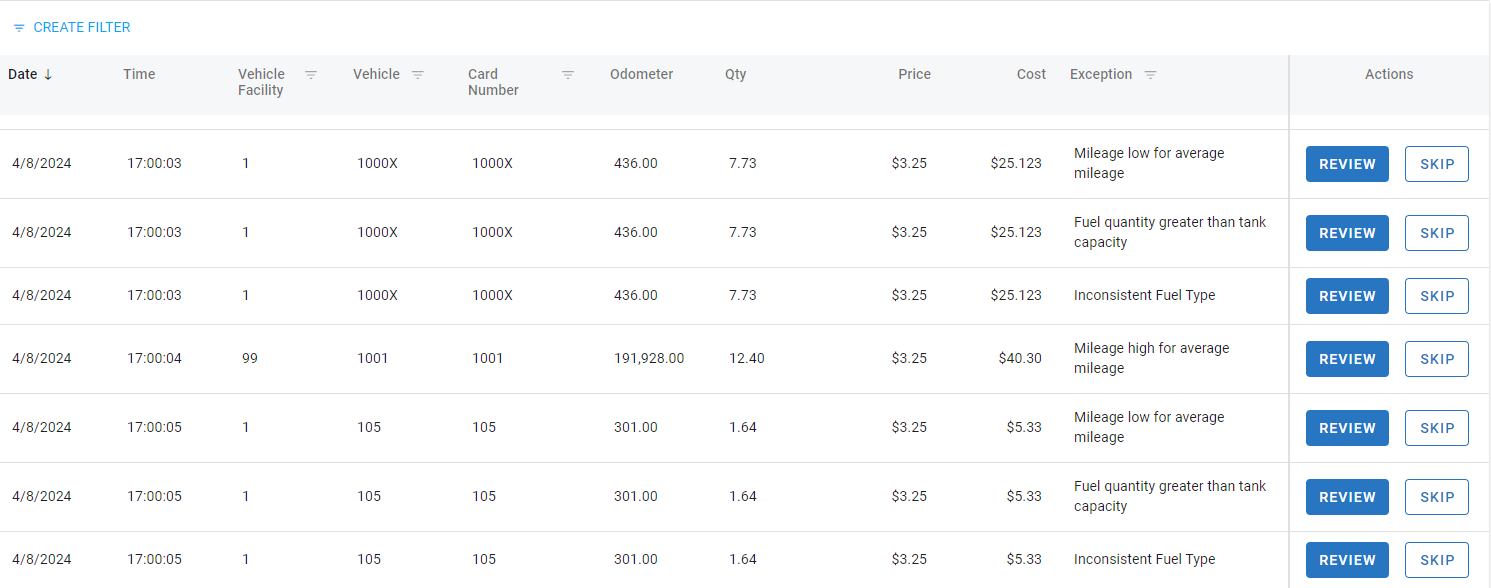
Review the fuel transactions looking for the correct:
Vehicle Number
Quantity
Price
Odometer
Make any necessary changes following the steps below
Common Exceptions
Message | What it means | What to do |
|---|---|---|
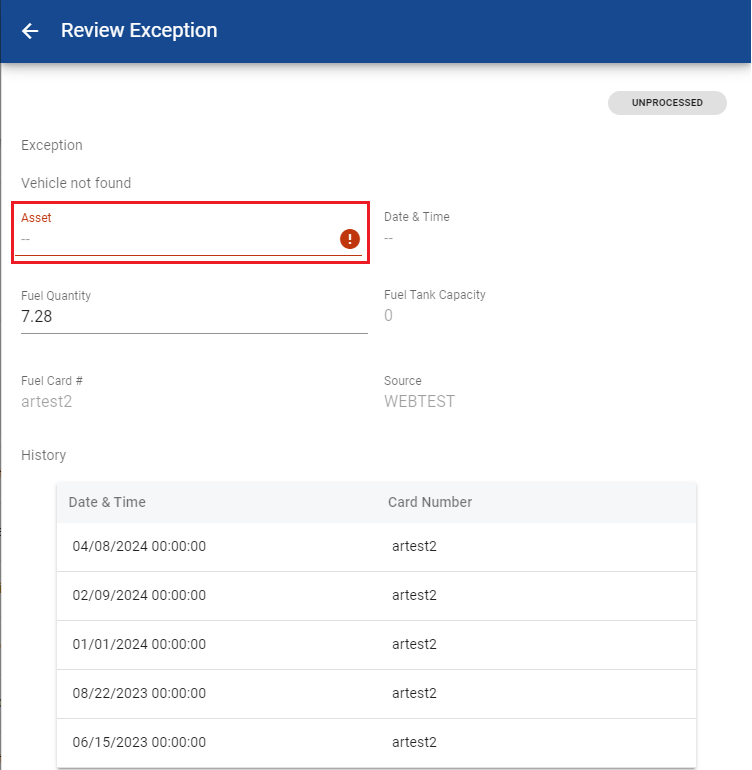
Vehicle Not Found | The Vehicle Number or Card Number coming from the Fuel System Does not match an RTA Asset Number or Cross Reference Number | Three General Fixes:
|
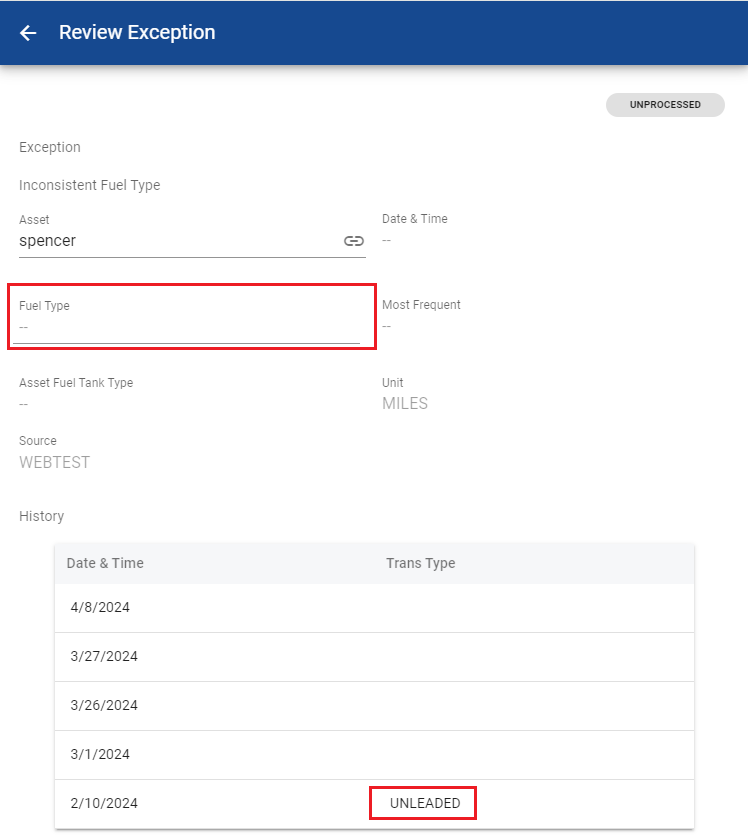
Inconsistent Fuel Type | The Fuel Transaction Fuel Type Does not match the Primary Fuel Type set in the Asset Record | If you did not initially set the Fuel Type in the Asset File then set it. See Setting the Fuel Type from the Fluids Panel in the Asset File |
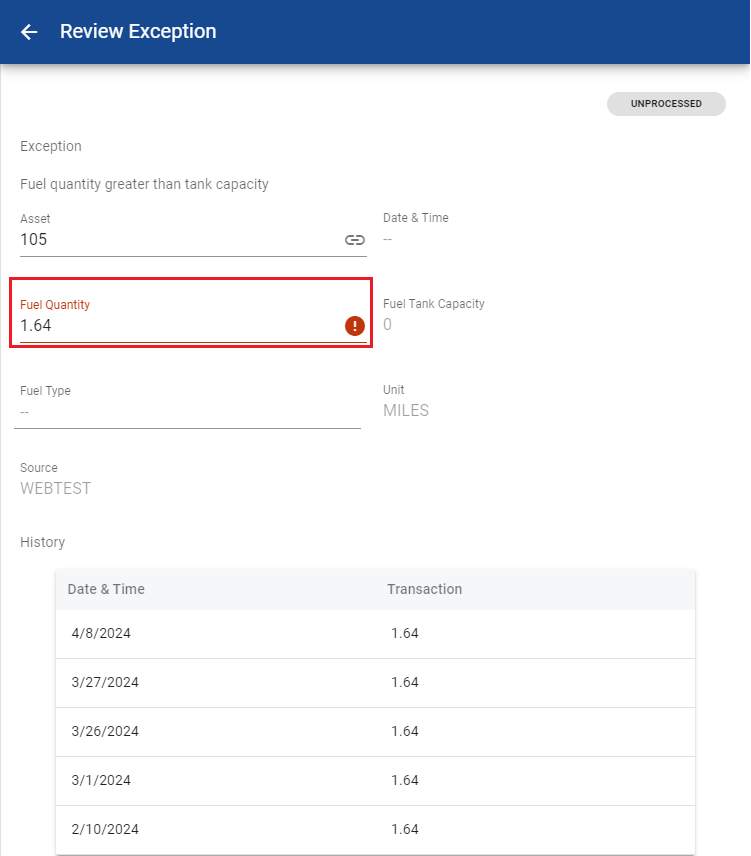
Fuel quantity greater than tank capacity | The Fuel Transaction has a greater fuel quantity then the Vehicle can physically hold (Tank Size) | If the Asset did not have a tank capacity setup initially you will want to do this first. See Setting the Tank Capacity from the Fluids Panel in the Asset File OR There may be truly be an issue with the Fuel Transaction |
Meter exceeds allowable mileage limit | The Miles/Hours/Kilometers traveled for the Fuel Transaction Exceeds the “Maximum” Factor (Typically set behind the scenes to 3X) based on the Expected Average MPG Set in the Asset File | First if the Asset was not set with a suggested Average MPG then you will want to make sure you have a good number in each Asset Record. Setting the Average MPG from the Fluids Panel in the Asset File This also may reflect an odometer issue in the Fuel Transaction itself or an Odometer issue in the Asset File |
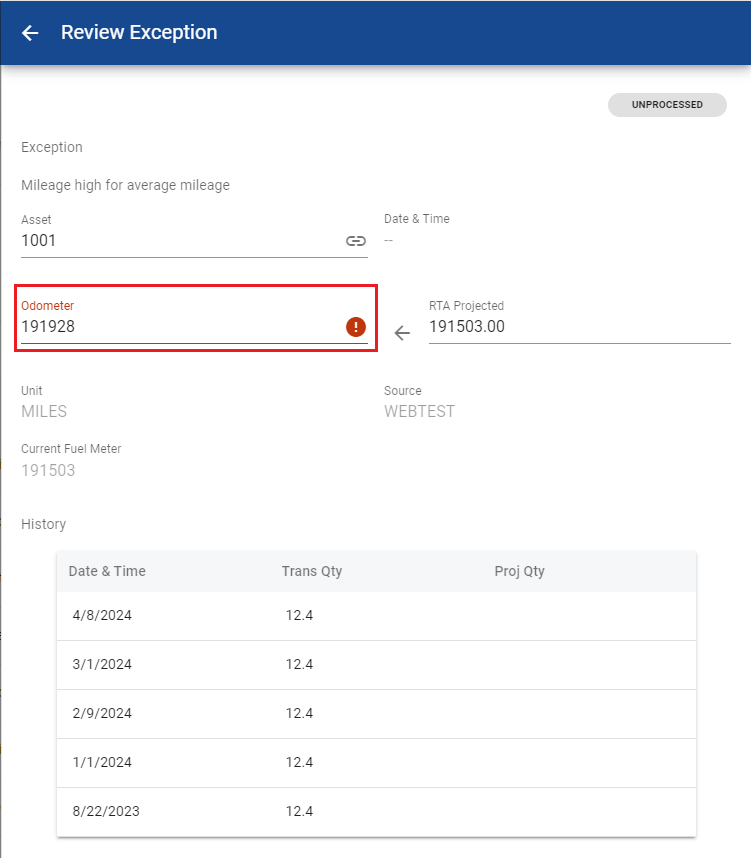
Mileage high for average mileage | The Miles/Hours/Kilometers traveled for the Fuel Transaction Exceeds the “High” Mileage Factor (Typically set behind the scenes to 1.5X) based on the Expected Average MPG Set in the Asset File | First if the Asset was not set with a suggested Average MPG then you will want to make sure you have a good number in each Asset Record. Setting the Average MPG from the Fluids Panel in the Asset File This also may reflect an odometer issue in the Fuel Transaction itself |
Mileage Low for average mileage | The Miles/Hours/Kilometers Odometer Reading coming in from the Fuel Transaction is less than miles expected based on the MPG from the asset and gallons entered in on the transaction. | Review the MPG field in the asset file and make sure it is correct. Verify that the gallons entered is the correct amount and that the miles travelled is also correct. |
Making A Correction
Occasionally there are errors in the fuel file, either an incorrect vehicle number or an extra zero on the odometer. To make a correction on a transaction:

Select review from the action column to the right of the transaction
Make the necessary changes
Exception Examples:
Here are a few Examples of exceptions you would see:
Vehicle Not Found Exception:
Inconsistent Fuel Type Exception:
Fuel Greater than Tank Capacity Exception:
Mileage High/Low/Exceeds Exceptions:
Select Save
Select Next or Fuel > Process EFI to go on to next step
Skipping an Exception
Occasionally there are errors in the fuel file, either an incorrect vehicle number or an extra zero on the odometer. To make a correction on a transaction:
You can select skip on any exceptions you wish to ignore

Printing or Exporting Exceptions
There is no dedicated Fuel Exceptions report, and the Review Exceptions screen itself does not have a print or export button. Exceptions are worked on screen from Fuel > Review Exceptions. If you need a printed or exported list of the transactions that still need attention, use one of the options below.
Option 1: Export the list from EFI History
Fuel > EFI History lists every fuel transaction, processed or not, and includes the Processed, Reviewed and Exception Type columns.
Open Fuel > EFI History.
Filter the Processed column to No to see only the transactions that have not been processed yet. You can also filter Reviewed or Exception Type to narrow the list to a specific exception.
Select the toolbar menu in the top right and choose Export to Spreadsheet or Export to PDF.
Export to Spreadsheet is available when spreadsheet exports are enabled for your company. If the option is greyed out, contact RTA Support.
Option 2: Run the EFI Transaction List report
Run Reports > RTA Standard Reports > Fuel > EFI Transaction List and set the Is Processed? filter to N. The report shows each transaction with its Reviewed? and Processed? flags and a Message column (Transaction Not Processed, Vehicle Not Posted or Transaction Processed), and can be grouped by Date or by Vehicle.
To investigate fuel discrepancies by pump, tank or fuel type, use Reports > RTA Standard Reports > Fuel > Print Variance instead.
Refer to Fuel - EFI History.
Refer to EFI Transactions.
Refer to Fuel Reports.