Recalls Master List Overview
The Recalls Master list consists of a centralized list of recalls that have been pulled in automatically from NHTSA Datasets and APIs. By default the list shows open recalls only; use the Open / All toggle at the top of the list to include closed and completed recalls. The master list in the Recalls Module is a comprehensive dashboard of all imported vehicle recalls relevant to a tenant’s fleet, displayed with key details such as recall ID, description, date, asset count, and status. It enables users to take action by reviewing, closing, or launching repair campaigns tied to these recalls.
To access recalls click on Assets>Recalls.
This article will cover the various columns that can appear on the Recalls Master List as well as actions that can be taken while viewing the list.
How Recalls Get Into Fleet360
Recalls are imported automatically. Once a day Fleet360 checks the NHTSA recalls data for newly published recalls and adds them to your Recalls list with the manufacturer’s summary, consequence and corrective action, the affected year/make/model combinations, and any documents NHTSA published with the recall.
Recalls cannot be entered or created manually. There is no add or create option for recalls anywhere in Fleet360; a recall appears in the list only when it is imported from NHTSA. Recalls is an optional feature enabled by RTA and requires access to Campaigns.
When a recall is imported, Fleet360 matches it to your fleet by comparing the recall’s year, make and model to your assets and links the matching assets to the recall (see the Vehicle Count column and the Assets tab of the recall). Assets can also be linked or unlinked manually on the recall’s Assets tab.
What you can do with a recall:
Review the details, affected makes/models, matched assets and attachments in the recall file.
Create Campaign from an open recall to plan and perform the repair work on the linked assets. The recall moves to In Progress and is completed when the campaign is closed.
Close a recall that does not apply to your fleet, from the master list or the recall file. A closed recall that has no campaign can be re-opened from the recall file.
If you received a recall notice from a manufacturer or dealer that has not appeared in the list, the recall has not been published in the NHTSA data yet or does not match the imported criteria. You can still schedule the work by creating a Campaign directly or by opening a Work Order for the affected assets.
Refer to Navigating Recalls File.
Refer to Campaigns.
Searching the Recall Master List
The search bar at the top of the master list will allow the user to search by specific datasets such as Recall ID, Component, and Manufacturer.

Columns appearing on the Recall Master List
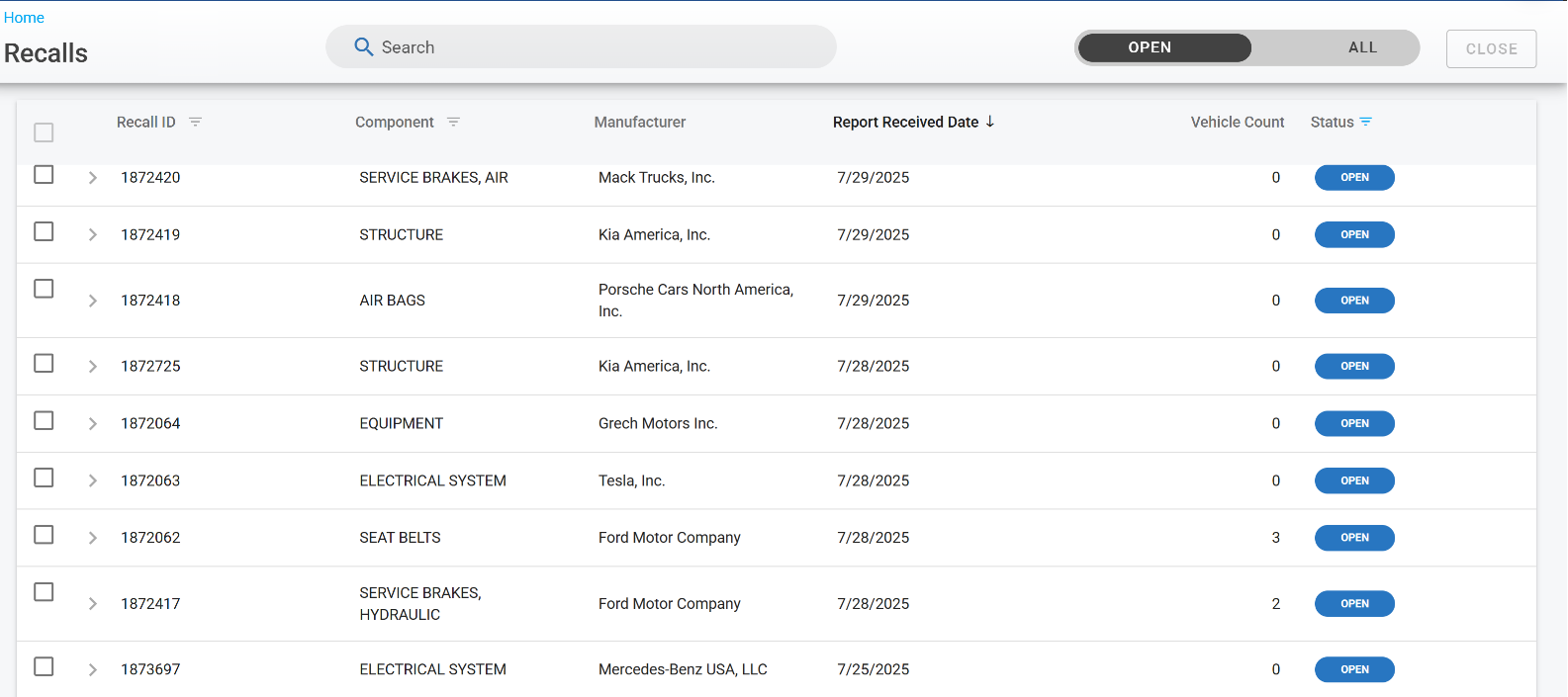
There are 6 columns available for display on the Recall Master List. The description of each is listed below.
Recall ID - Unique identifier for the recall (from the data source, NHTSA)
Component - Short description of the recall
Manufacturer - The manufacturer of the asset
Report Received Date - When the recall was uploaded into Fleet360
Vehicle Count - Total number of assets in the fleet that match the recall criteria (make/model/year)
Status - Current state of the recall (Open, In Progress, Closed, Completed).
Open - The status when a recall is imported. Create Campaign and Close are available.
In Progress - A campaign has been created from the recall and the work is being done.
Closed - The recall was closed manually because it does not apply to your fleet. A closed recall without a campaign can be re-opened from the recall file.
Completed - The campaign created from the recall has been closed.
Actions that can be performed on the Recalls Master List
There are multiple actions that can be taken from the Master List at the click of a button.
Details
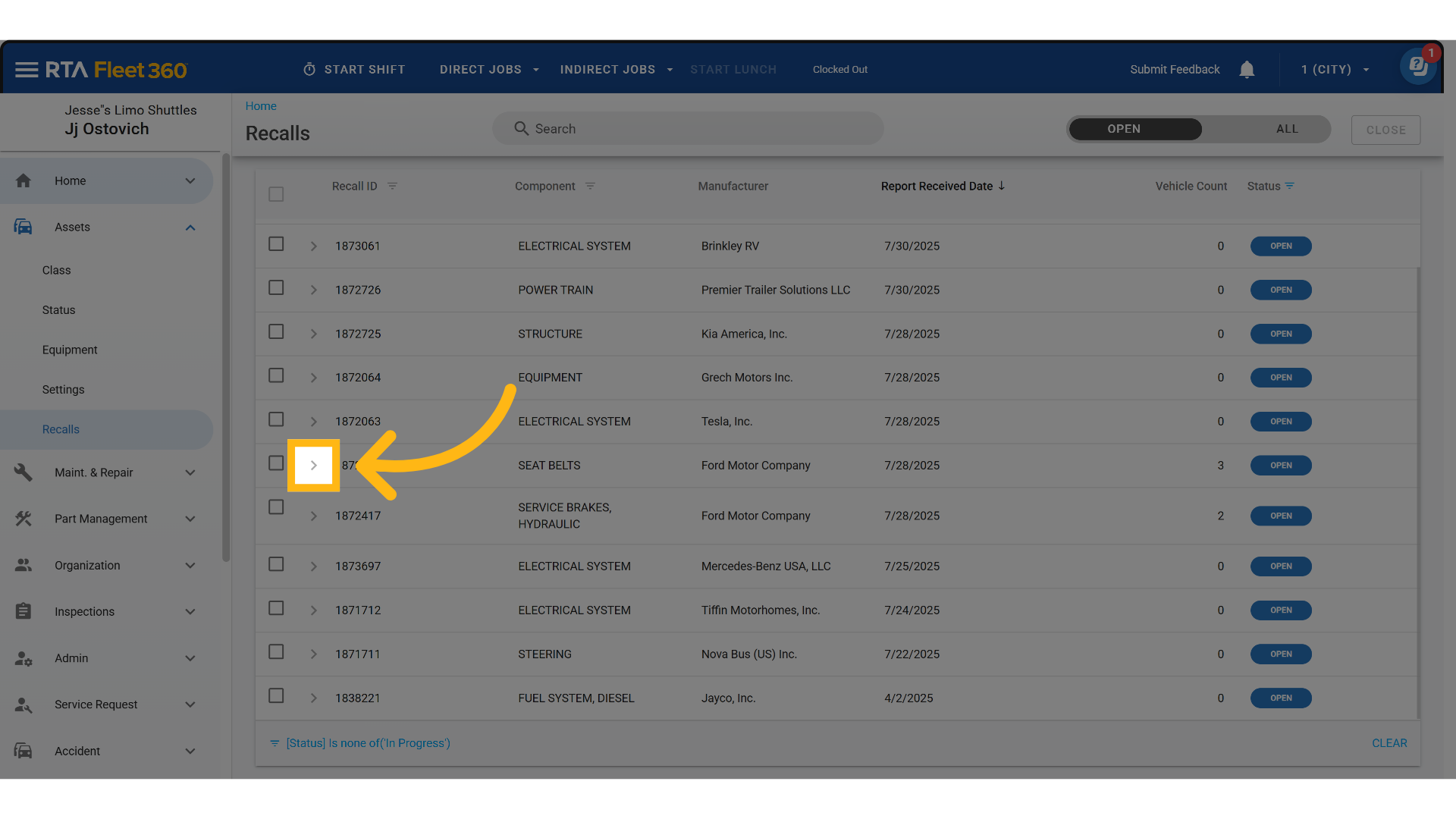
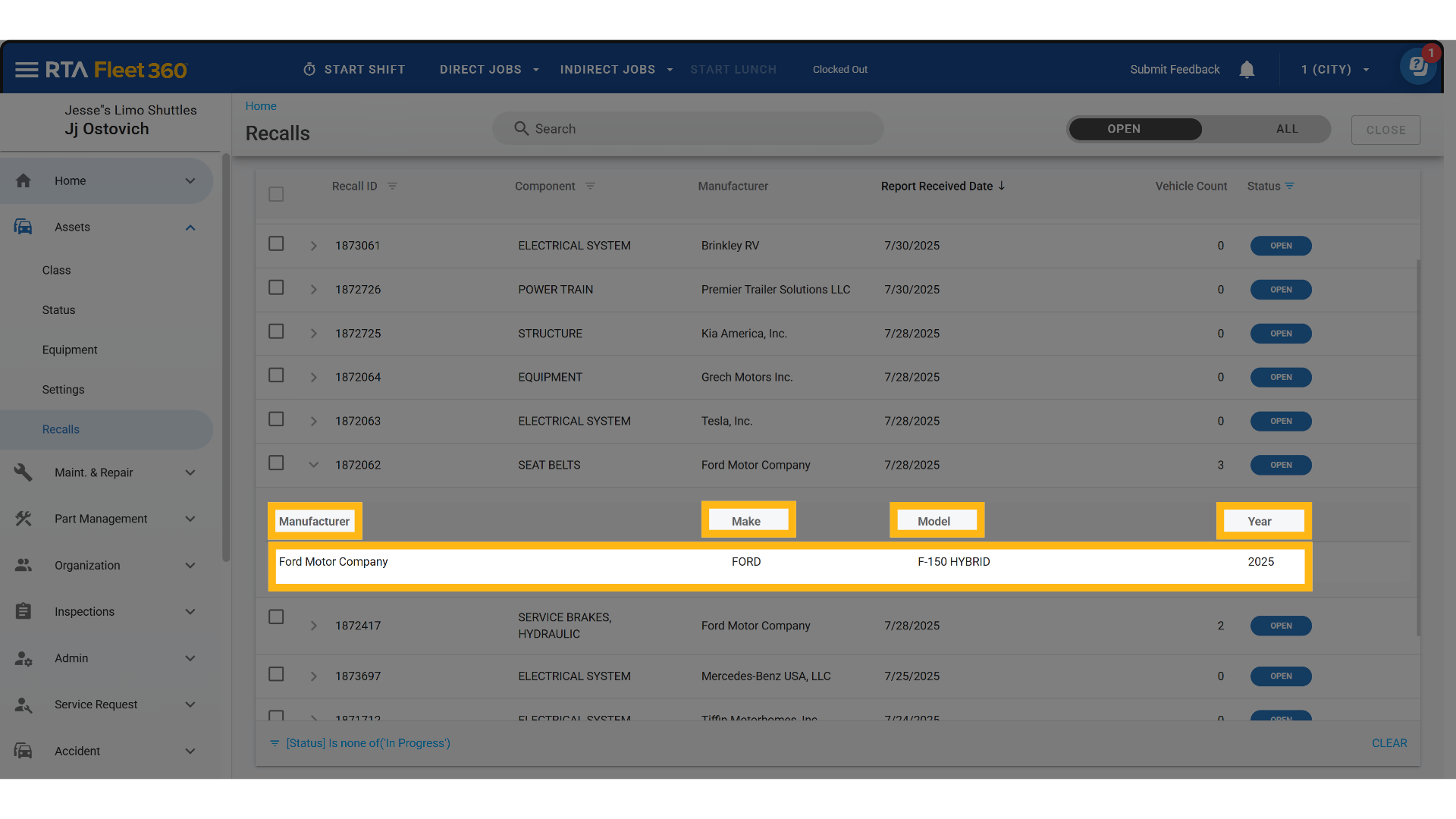
To see year, make, and model that is involved with each recall, see the following:
Click the carrot symbol to open details
Review expanded details to see Manufacturer, Make, Model and Year that the recall is for
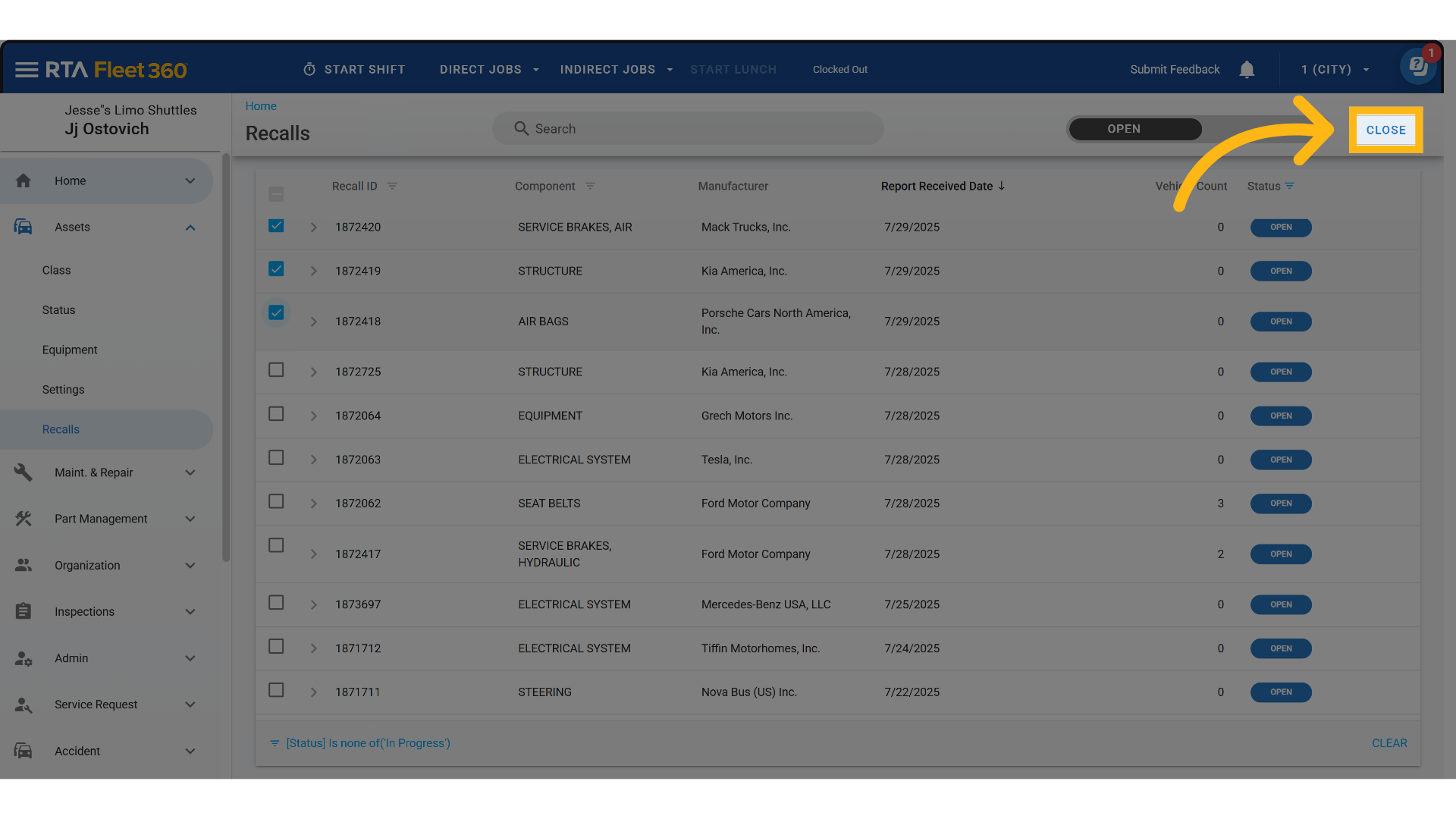
Closing Recalls
Closing irrelevant recalls helps maintain a clean and focused recall management dashboard.
Select the recalls that are not relevant
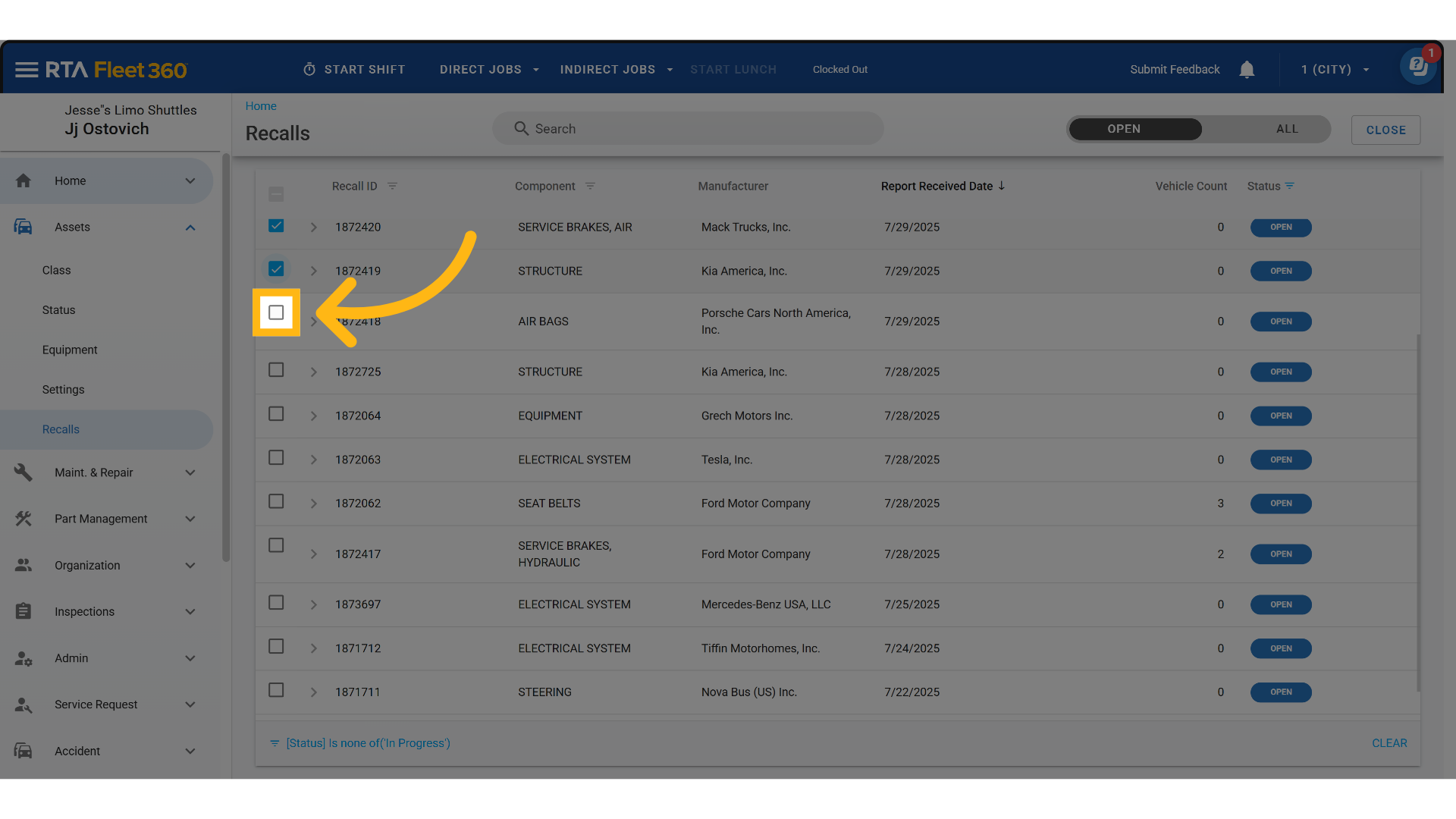
Click Close to close recalls